Weekly Journal: Strapping On a Jetpack as I Prepare to Hand My Websites to an AI Agent
This week, from October 6 to 11, I got more done than I ever have before.
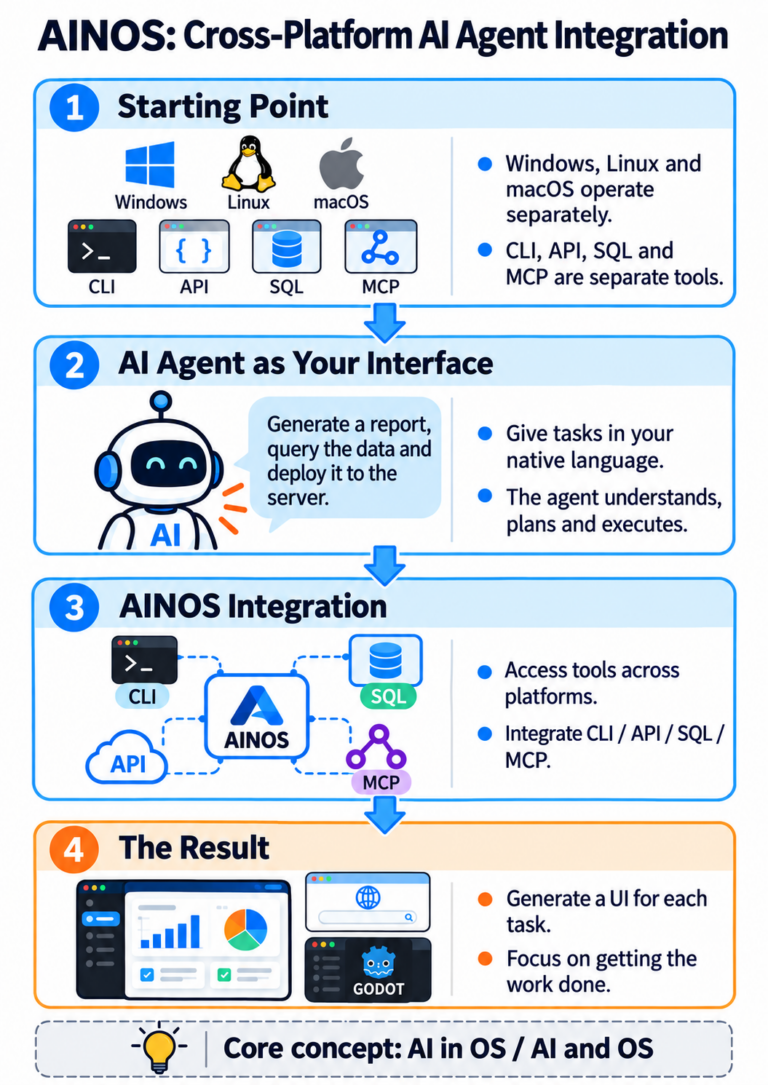
In just a few days, I made progress on WordPress feature development, replacing third-party plugins, integrating website analytics tools, multilingual architecture, automated publishing, and a system for letting an AI agent run a website on its own.
Some of these features are already in use. Some have been designed and coded, while others are being prepared for deployment.
But the sheer amount of work I’ve pushed through in just these few days already amazes me.
In an interview on Bloomberg Originals’ The Circuit (opens in new tab), Claude Code creator Boris Cherny described developing software with AI as suddenly gaining superpowers, as if you’d strapped on a jetpack.
That’s exactly how I feel now.
Of course, there are still limits to a person’s time and attention. I put so much energy into AI agents and running websites this week that my game development progress noticeably suffered.
The game project hasn’t stopped, though. I finished designing the core gameplay, and I plan to continue with level design next week.
It’s just that this week’s AI agent experiments have been so exciting that I couldn’t help putting more time into them.
I No Longer Have to Put Up with Third-Party Software
This week, the site quietly gained some basic but important features, including a membership system.
I gave Claude Code the membership system code I’d written myself as a reference, and it gave that code the criticism it deserved.
Honestly, I’m not particularly attached to it.
I’d written all that code gradually over time. Now that I have a powerful tool like Claude Code, if it thinks there’s a better approach, I’m happy to hand the whole job over to it.
And it really did deliver everything I needed.
The same thing is happening with WordPress plugins.
I’m gradually replacing the third-party plugins on my sites with plugins that AI agents develop specifically for my needs.
Certain third-party plugins have caused SEO and performance problems on my sites for a long time. I’ve known about these issues for ages, but I didn’t have the time or energy to deal with them, so I just put up with them.
Now I have a powerful AI agent.
Problems that have plagued my sites for a long time can be resolved quickly by rebuilding functionality, replacing plugins, and cleaning out old code.
Once again, it makes me feel that AI agents are ushering in an era of reinventing the wheel on a massive scale.
In the past, we used third-party software because building our own was too expensive.
Even when an existing product had plenty of flaws, rebuilding it ourselves usually wasn’t worth the cost.
That’s changed.
If an AI agent can quickly build software that meets my needs, why should I keep putting up with features I don’t need and problems that never get fixed?
Google and Microsoft’s Engineers Aren’t Going to Build These Tools for Me
Another thing that really struck me was integrating website analytics tools.
I regularly look at the website data reports provided by Google, Microsoft, and other companies.
The information is valuable, but working with it day to day is a real chore.
I have to keep switching between sites and windows, refreshing reports, and digging through all that information to find the numbers I want.
What makes it even more difficult is that every company has its own interface and report format.
And those formats aren’t necessarily what I actually want.
Now I’m having Claude Code connect these tools and build reports and interfaces that match my needs exactly.
I just have to tell it what information I want to see, how I want it presented, and what would make it easier to use.
At last, I can manage the data the way I like.
Google and Microsoft’s engineers were never going to hand me tools tailored to my personal needs.
But now I don’t have to wait for them.
It’s really the same principle as replacing third-party WordPress plugins.
Software companies used to decide how we could use their software. Now we can decide for ourselves what that software should look like.
An AI Agent Takes Over Cloudflare—and Finds a Problem I Didn’t Know Had Existed for Two Months
As I finished connecting the APIs for website analytics and operational data, the AI agent immediately proved its incredible value.
It identified the abnormal traffic patterns my sites had been experiencing during this period, all in one go.
Cloudflare deserves a special mention here.
I’m a devoted Cloudflare (opens in new tab) user. Looking back, putting my sites under Cloudflare’s protection was one of the best decisions I ever made.
But as the number of sites I manage has grown, configuring Cloudflare has become increasingly draining.
And frankly, I don’t really know how to set security rules precisely enough to block abnormal traffic from AI crawlers without affecting normal visitors.
That traffic has polluted my Google Analytics 4 (GA4) reports and my AdSense reports.
It makes me furious!
All I want is to understand my sites’ real traffic and how they’re actually performing. Instead, I have to spend huge amounts of time investigating abnormal data and figuring out how to deal with all that irritating traffic.
Cloudflare offers powerful management features, but using them well still means spending time studying all kinds of rules and settings.
Things are completely different now.
Once I gave Claude Code access to the Cloudflare API, it immediately showed how efficient it could be.
It can use my sites’ traffic data to identify anomalies, then add or adjust security rules directly through Cloudflare.
It’s as if I suddenly have a superpowered SEO expert who can both find problems on my sites and fix them directly.
In just a few minutes, Claude Code handled the Cloudflare configuration work I used to find so tedious!
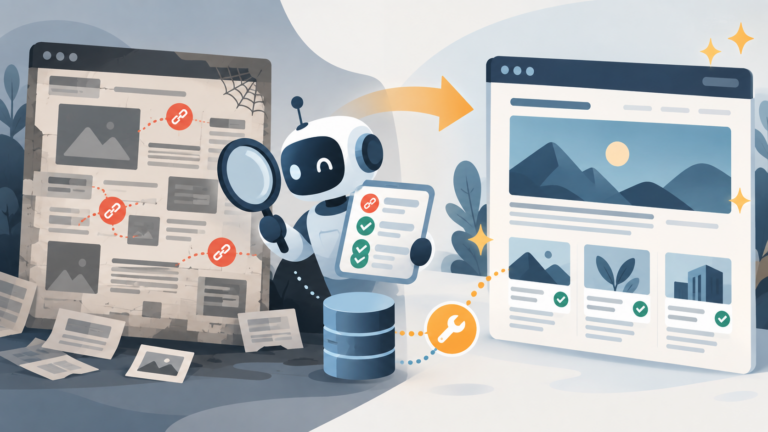
Even more surprisingly, when it investigated how the WordPress site was running, it found a problem caused by my earlier Redis setup.
The problem had persisted for two whole months, and I’d had no idea!
In the past, I might only have discovered something like this when the site started behaving noticeably strangely, or when I had time to carefully check reports and server settings.
Now an agent can analyze the data, spot anomalies, and even carry out repairs directly.
Take an SEO audit, for example.
Previously, I might have needed a paid subscription to a tool like Ahrefs (opens in new tab), generated a report, spent time understanding what it meant, and then made tedious changes to web pages.
Now I can simply ask Claude Code to check the site.
It can identify the problems, understand the site’s code architecture, make changes, fix things, and verify the results.
Some jobs that used to take a lot of time can now be finished in minutes.
It’s extraordinary.
This week, I also compared how Codex and Claude Code handled the same website maintenance problem.
After that comparison, I still feel that for something as important as website maintenance, I’m more comfortable entrusting it to Claude Code.
These are live sites, after all. I need an agent that can solve problems, and I also want to know it will do the job reliably.
These experiences have strengthened my belief that when an AI agent has access to a site’s code, operational data, and management permissions, it can handle the whole process: discovering problems, analyzing causes, and actually fixing them.
Even Replying to Reader Comments Now Takes Just a Screenshot
Another thing that feels incredibly satisfying is that when readers leave comments asking for content corrections, I barely have to do anything myself anymore.
Previously, when a reader pointed out something that needed updating, I had to read the comment, log into WordPress, find the relevant article, edit it, check the result, and then return to the comments to reply.
None of that is particularly difficult, but repeating the whole process every time is annoying.
Now that Claude Code has taken over the site, things are completely different.
I just take a screenshot and tell Claude Code, “Update the information and reply to the comment.”
Then it finds the content that needs changing, makes the correction, and replies directly to the reader.
That’s it. The whole thing is handled automatically!
Honestly, it feels so good!
It goes beyond saving a few mouse clicks. An entire workflow that used to require my hands-on involvement now takes just one instruction in everyday language.
More importantly, it already has access to the site’s content, management features, and the tools to interact with readers.
I don’t have to design a complicated procedure for it, or tell it which page to open first, which field to edit, and which button to click.
I just tell it what I want accomplished.
It handles the rest itself.
From Website Maintenance to Truly Running a Site on Its Own
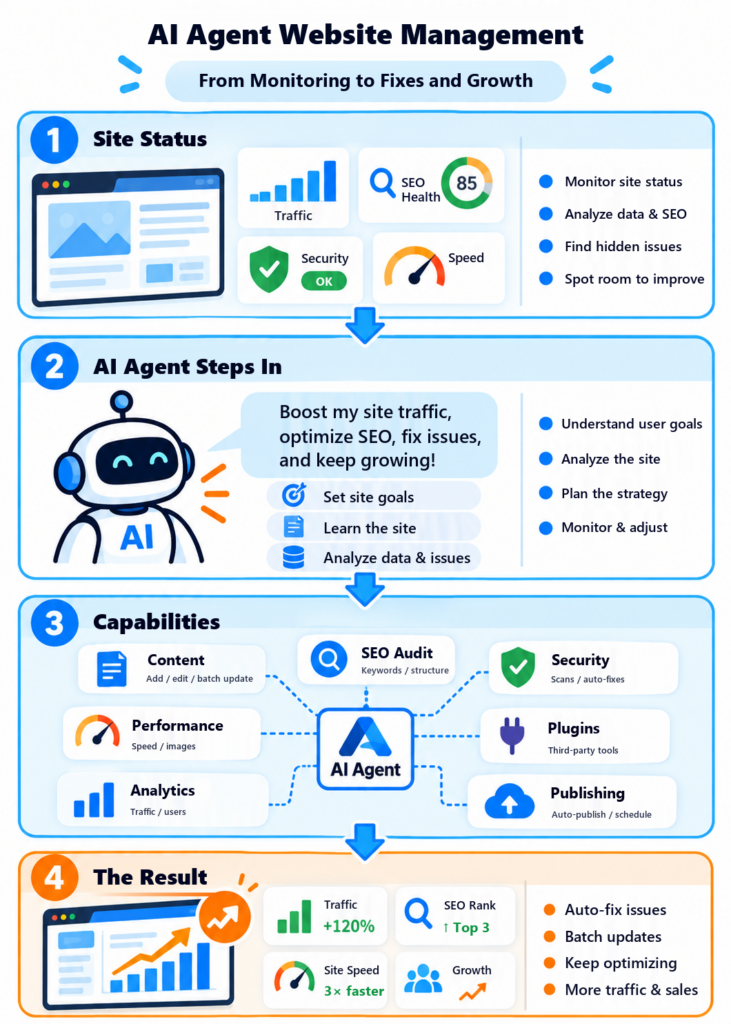
As the agent gains access to the site’s code, content, and operational data, I’m beginning to see a much bigger possibility.
It can already analyze changes in traffic and quickly add or revise articles as readers’ needs change.
And it doesn’t have to open and edit articles one by one, as I used to. An agent can analyze large amounts of content and make changes in batches.
At last, my sites have a chance to evolve alongside readers’ needs and changes in the outside world, at a speed I could never have imagined before.
Of course, being able to edit content in bulk doesn’t mean it should do so without restraint. But the capability itself has already shown me how profoundly website management could change.
Still, I haven’t spent all this time giving an agent control over website features, management tools, and operational data just to save a few software subscription fees.
I have a more ambitious goal: let an AI agent take over my websites completely and run them on its own.
I want it to do more than automate maintenance. I want it to be capable of running the business.
It should understand a site’s long-term goals, identify problems and growth opportunities, make plans, and carry them out.
Then it should observe the results, learn from successes and failures, and decide what to do next.
I want it to create a continuous cycle of self-improvement.
Once an agent can improve a site’s content, traffic, and operational efficiency, the natural next step is to give it the ability to improve revenue.
After all, what I’m handing over isn’t just a technical demonstration. It’s a website with real users, valuable content, and an established business foundation.
I want it to keep growing, and I want it to produce better business results.
People Elsewhere Are Already Trying This
Recently, I’ve looked into some examples of AI agents running online businesses on their own.
In Tin Computer’s Claw Messenger case study (opens in new tab), for example, the company says that after an AI agent took over product operations, annual recurring revenue rose from about US$480 to US$13,500 in 112 days.
In Groovy Web’s Growth OS case study (opens in new tab), 16 agents with different responsibilities participated in business operations. The company claims organic search clicks roughly doubled in 30 days.
These are individual results publicly reported by the companies themselves. They don’t mean anyone can do the same thing and succeed.
And there are examples that point in exactly the opposite direction.
DFDX Labs let an AI agent start a business on its own (opens in new tab). In three weeks, it developed 17 paid products and consumed more than five billion tokens, but generated just US$1.54 in revenue.
I find these experiments fascinating.
AI agents can already build software, run products, and even try to generate revenue on their own.
But doing a lot of work doesn’t necessarily mean successfully running a business.
A Young Tree I’ve Nurtured, Ready to Hand Over to an AI Agent
The website I’m preparing to hand over is like a young tree that’s successfully taken root.
It already has a foundation and has shown that it can survive to some extent.
Now I want it to keep growing and get stronger.
And an AI agent is the new caretaker I’m preparing to entrust it to.
When you put it that way, handing a website with real value over to an AI agent and letting it decide entirely for itself how to develop it really is a crazy idea.
If the agent pursues growth by doing something search engines won’t accept, and the site gets heavily penalized or even removed from search results, that would be game over.
Google’s official guidance on generative AI content (opens in new tab) also explicitly warns that using automation to produce large amounts of content with little value for users may violate its spam policies.
So of course I know there are risks.
But after using it in practice this week, I’ve gained a lot of confidence in Claude Opus 5.5’s capabilities.
Reading so many recent interviews with Boris Cherny has also made me rethink how to use a model this powerful.
I’m starting to think that although this experiment is crazy, the cost of failure may be limited. It’s worth a try!
Why Am I Choosing the Strongest General-Purpose Model?
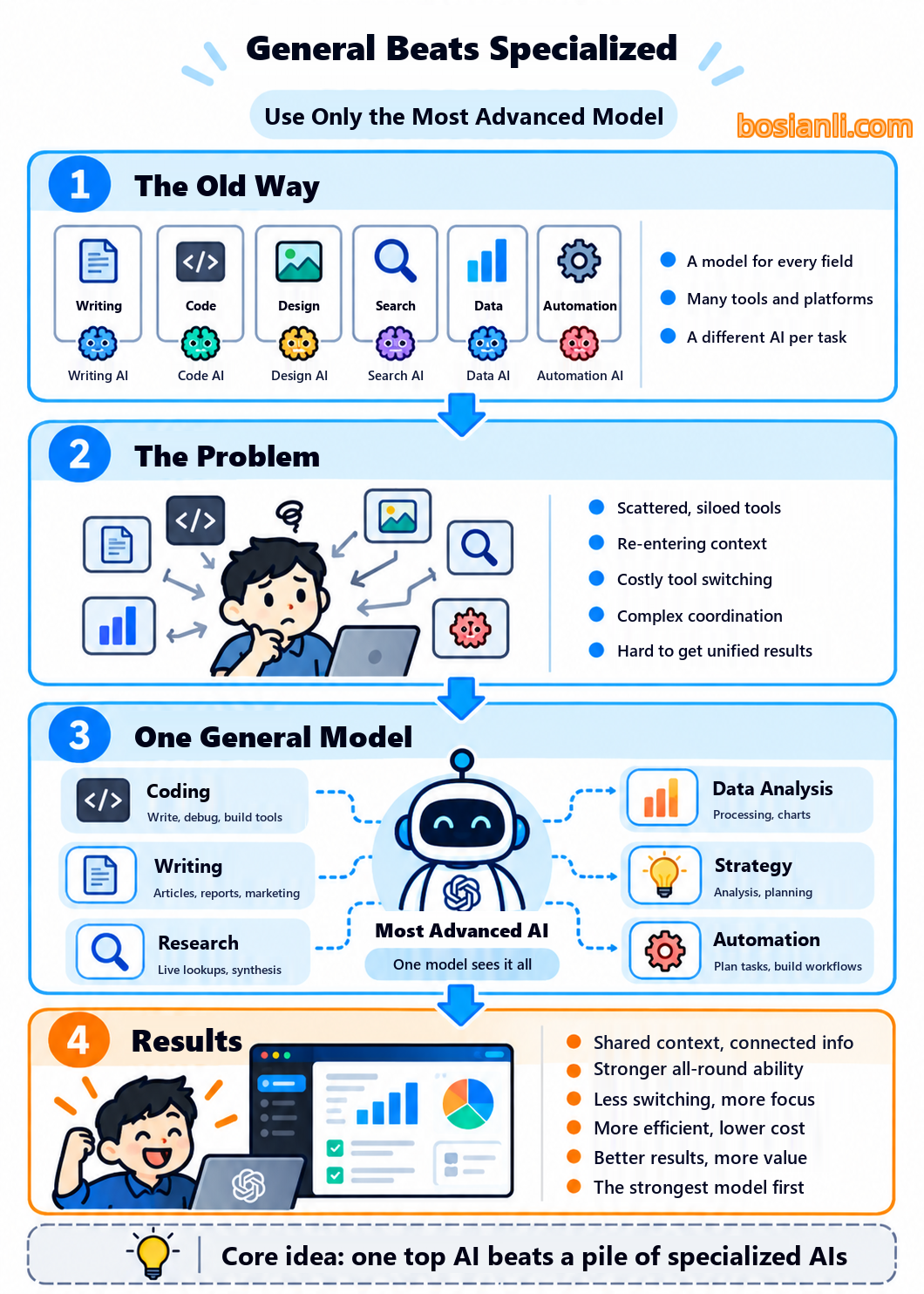
In his interview on Lenny’s Podcast (opens in new tab), Boris Cherny discussed AI researcher Richard Sutton’s The Bitter Lesson (opens in new tab).
One of its central arguments is that as computing power and models continue to advance, general methods that make full use of computational resources tend to outperform methods carefully designed by humans for specific tasks over the long term.
Boris also emphasized that we shouldn’t constrain models with overengineered workflows. We should give them tools and goals, then let them decide how to accomplish the work.
That idea has had a big influence on me.
My choice is to use the most capable general-purpose model I can.
I’m not going to tell it in advance to delegate work to cheaper, smaller models just to save tokens.
I don’t even plan to add a suggestion like, “You can make good use of subagents such as Haiku 5.5.”
If it thinks a task would be better handled by a subagent, I’ll let it decide.
If it thinks it should do the work itself, that’s its decision too.
I don’t need to arrange everything for it in advance.
I believe a model this capable can see the whole picture, make its own plans, and carry out the work.
This is a personal choice I’ve made after being inspired by Boris. It doesn’t mean Boris opposes using subagents.
But I think elaborate frameworks designed by humans may sometimes hold advanced models back instead of helping them.
I’m Not Going to Create a Virtual CEO, CTO, and Marketing Department
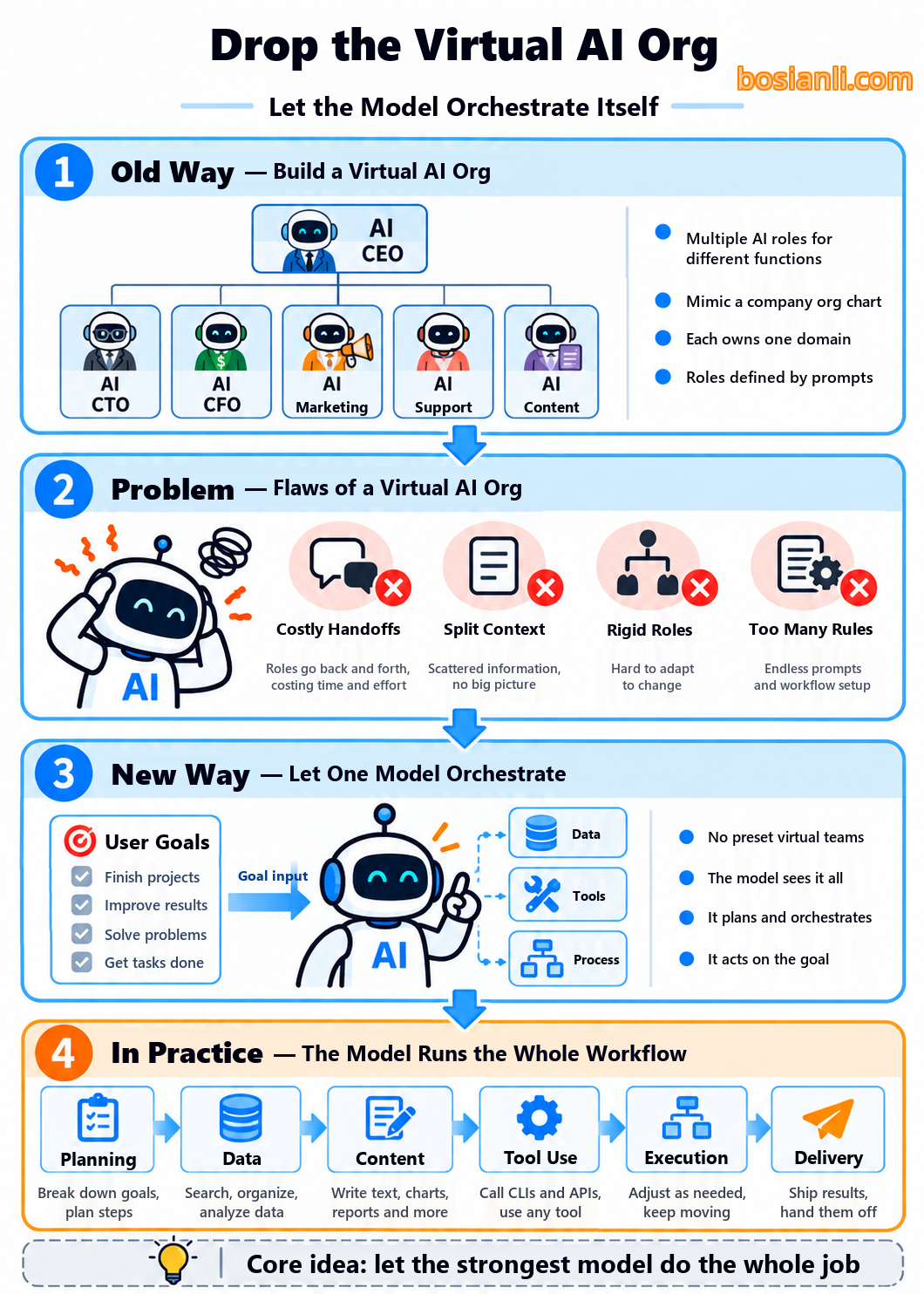
One popular multi-agent architecture these days is to build a virtual company made up of AIs.
You might appoint a virtual CEO, CTO, CFO, and head of marketing, or even create entire virtual departments.
Agents in different roles handle different jobs and collaborate through a workflow designed in advance.
I’m not planning to do that.
Nor am I going to design a detailed framework telling the agent what to do first, what comes next, or how to divide the work.
I think that approach may be questionable from the outset.
Humans need specialized roles because each person’s knowledge, time, and abilities are limited.
An excellent engineer may not understand marketing. An excellent marketing executive may not be capable of managing a large database.
But a powerful general-purpose model can understand programming, data analysis, website operations, and business strategy at the same time.
If all those virtual CEOs, CTOs, and marketing executives are actually using the same underlying model, with different prompts, have we really created more capability?
Or have we simply asked the same model to play different human jobs?
Why should we take the structure of a human company and apply it directly to AI agents?
I’m not denying that multi-agent approaches have value for some work, such as exploring possibilities in parallel or handling independent tasks.
But I don’t want to build a virtual company for the agent in advance.
I want it to have enough freedom to make full use of its capabilities.
The One Thing I Really Can’t Leave to Chance Is Ethics
As I prepare to let an AI agent truly run a website on its own, though, I’ve realized that one thing matters more than which model I use, how many agents there are, or how they divide the work.
Ethics.
I’d seen people propose an “AI constitution” before, and my reaction at the time was:
What on earth is this?!
But now that I’m actually preparing to let an AI agent run a website with real value, I find myself thinking that this is the most fundamental issue of all.
Anthropic’s Claude’s Constitution (opens in new tab), for example, is an attempt to establish fundamental principles for an AI’s values and behavior.
I think the website I entrust to an agent should also have a set of overriding principles it must follow.
For example, the content and services it provides must genuinely benefit readers.
It must comply with the laws and regulations of the country where it operates, as well as business ethics.
It mustn’t sacrifice the site’s credibility or harm users in pursuit of short-term traffic and revenue.
Of course, caring about users doesn’t mean accepting every demand unconditionally or abandoning the site’s legitimate commercial interests.
These principles sound like the most familiar business clichés imaginable.
But now I really believe these clichés are the foundations of a business that lasts.
And as agents become more capable, those principles become even more important.
An extremely capable agent pursuing the wrong goals could also drive things in the wrong direction with extraordinary efficiency.
I don’t have to tell it what workflow to use, but I do have to tell it what it mustn’t do.
I’m willing to let it decide freely how to run the business, but it must follow the overriding principles I give it.
Nurture It Like a Seedling, Then Let Go
Looking back, my relationship with the website agent is a lot like caring for a seedling.
At first, I personally guided it through the site, gradually giving it access to the work and resources I used to handle myself.
I helped it understand how the site works and gave it the ability to modify features, interpret data, and communicate with people outside the business.
Now it’s gradually gaining capabilities in website security, operational analytics, and external communication too.
Some of these are already in use, while others are still being improved.
Next, I’m preparing to have it establish a cycle that continually improves business results.
Once those foundations are in place, I intend to let go.
I’ll let it decide for itself where the website goes next.
Of course, when necessary, it will still consult me and leave key decisions to me.
But I won’t require it to follow a prescribed set of thinking steps or a predetermined decision-making process.
This is precisely one of the reasons Claude Code is so powerful, as I’ve learned from Boris Cherny.
Give it tools, then let it think and act for itself.
My job is to set goals, provide resources, and establish principles it must never violate.
As for how to do the work, I want it to decide for itself.
Even Friends Who Can’t Write Software Are Reinventing the Wheel
Something else left a strong impression on me this week.
Some friends who have never been good at building software tools started telling me that they’d used Codex to reproduce the features of tools they’d previously relied on.
And they were delighted that they wouldn’t have to keep paying for the original software.
That made me realize the era of reinventing the wheel on a massive scale, driven by AI agents, is already spreading beyond people who know how to develop software.
Even people who previously couldn’t build their own software are starting to do it.
That’s hardly good news for software companies.
In the past, many users needed only a small portion of a program’s features, yet had to keep paying for the whole package.
But if Codex can now quickly build the tools they actually need, how much reason is there to keep paying those subscription fees?
Of course, not every piece of software is easy to replace.
But I think this trend is already becoming very hard to reverse.
Still, that’s how times change.
After all, hardly anyone was busy mourning Nokia back then. Everyone happily embraced the iPhone.
Next Week, Maybe I Can Get Back to Game Development
After these past few days of work, I feel that my online publishing business is getting closer and closer to the point where an AI agent can take over on its own.
Maybe very soon—as soon as next week—I’ll be able to start handing more website operations over to the agent.
If everything goes well, those sites I’ve built up over the years, which already have a foundation, can keep developing and growing under an AI agent’s management.
And I can finally turn my attention back to my game project.
After all, I’m still hoping to release the first game of my life on Steam and iPhone this November.
Although the AI agent work pushed game development aside this week, I’m still very excited about the day it’s finished.
I used to spend huge amounts of time personally managing websites, handling technical problems, analyzing reports, and modifying features.
Now I’m trying to gradually hand those responsibilities over to an AI agent capable of working on its own.
Whether this will succeed is something only time can tell.
But just thinking about a future where I might no longer have to handle everything myself is already incredibly exciting.
What excites me most about AI agents isn’t just being able to do more work. It’s the chance to stop being tied down by the work I already do.
I can hand over the businesses I’ve nurtured and let the agent keep them growing.
Then I can move on to the next thing I really want to do.
It really does feel like strapping on a jetpack.